See this Forum article I wrote and the Peoria Journal Star printed today.
Forum: OSF failing patients from Haiti with urgent needs.
Posted Jul 15, 2010 @ 11:00 PM
Re. July 5 article: "Children's Hospital tours scheduled":
I am sure the brand new, $290 million OSF Children's Hospital and Emergency Department is beautiful and will be loaded with technology. People from central Illinois deserve this structure, along with competent medical personnel inside to deliver high-quality care.
However, every society around the world deserves the same chance at cutting-edge medicine.
During the last seven years Haitian Hearts patients who have returned to Haiti after heart surgery at OSF have been categorically denied follow-up surgery at OSF. Several weeks ago, a young girl operated on 13 years ago at OSF died in Haiti. She needed repeat heart surgery.
It's difficult to find other medical centers in the U.S. to take OSF's Haitian patients. They believe Haitian patients cared for in Peoria are OSF's medical and ethical responsibility.
Two more Haitian patients operated on at OSF need heart surgery again. They survived the devastating January earthquake and both have been homeless in Port-au-Prince. Last month I examined them. Both will die without heart surgery soon.
Haitian Hearts donated over $1.1 million to Children's Hospital of Illinois earlier this decade to help build this new OSF medical complex. We would pay for both of these patients, as well.
Over 130 years ago, OSF's founding Sisters said they would turn no one away. The current OSF Sisters say the same, but unfortunately Haitian Hearts patients have been excluded from their mission.
The new OSF medical complex needs to show how "beautiful and uplifting" it really could be. OSF could really shine if they would accept back their Haitian patients and give them another chance at life.
John A. Carroll, M.D.
Haitian Hearts Medical Director
West Peoria
Copyright 2010 pjstar.com.
------
I am quite sure OSF is mounting a rebuttal to my opinion written above.
OSF's usual modus operandi is to recruit a well known Peoria person to write an article stating why I am all wrong. Who would want this job to defend OSF's neglect of Haitian kids who are dying as a result of OSF's neglect?
Someone will run with the ball for OSF and I will post their article when it appears.
The host families for these Haitian kids in the Peoria area are very afraid of OSF...and for good reason. Much of the Peoria community is afraid of OSF...even big donors to OSF would like to see Mr. Steffen replaced, but their own medical problems make them think twice about going public.
In the meantime, I need to find medical centers to accept Jenny and Henri. They don't have the same time or resources as does OSF.
Friday, July 16, 2010

Tuesday, July 6, 2010
"Affluence is a Funny Thing"

Photo by John Carroll
Cite Soleil, Haiti
"Affluence is a funny thing. Once so many millions of people have so many millions of dollars at stake, even life-and-death issues are resolved on the basis of what protects my money, right now--not the general good or the planet's health. Money and fear will choke even the strongest to death...unless they take that step back, take that breath, and see what money and fear are doing to them."
Gary Smith
Sports Illustrated, July 5, 2010
(Smith wrote an article on the gulf oil spill. This paragraph is relevant for all areas of life. Money and fear do bad things to people and fear of losing money hushes them up, even when they know they should speak up and act.)
Friday, July 2, 2010
On the Ground in Haiti

On the Ground in Haiti
John A. Carroll, M.D.
June, 2010
My wife Maria and I worked in Haiti during part of the months of May and June. We stayed in a guesthouse-orphanage just outside of Port-au-Prince.
A lady named Yolande lived right across the street from us.
Yolande is 78 years old and lives under a blue tarpaulin which encloses a small pup tent inside.
During the earthquake on January 12 her shack, which was located several miles away, was so damaged that she had to move out. Yolande suffered some leg injuries at the time of the quake and still has one lower leg wrapped in a rag. But Yolande smiled and told me that her legs were "much better".
One afternoon shortly after we arrived, I entered an opening in Yolande's blue tarp. The stifling heat, humidity, mosquitoes, and flies were overwhelming.
The tarp was fastened to thin wooden poles and tied above with shoe laces and other fragments of cloth.
Yolande's family brings her rice and vegetables when they can and she cooks in a metal bowl over pieces of charcoal.
I found Yolande to be a practical and pleasant woman. She did not complain about her living arrangements and even said that Americans are the most charitable people in the world. I sure did not feel that way right then as I hurried out from under the tarp so I could get a breath of cooler air in the street.
During this time of the year in Haiti, the rain comes in torrents in the late afternoon or evening, and now this rain seeps through Yolande's tarp and leaks into her tent. So on top of roasting, Yolande and her family are wet much of the time too.
These hardships are not isolated to Yolande.
Haiti has an estimated 9 million people with one third of the population living in the capital, Port-au-Prince. In this city there are over one thousand tent cities, and an estimated 1.5 million people are still homeless five months after the quake. Many people told me that they are simply too afraid to move back inside of their houses. If their houses are still standing, the walls may have been fissure (cracked) and people fear they will collapse on top of them.
Several miles from us downtown Port-au-Prince looks like a nuclear bomb struck it. The once beautiful Haitian National Palace is collapsed and the majority of nearby Haitian government ministry buildings downtown were destroyed in the 47 second earthquake. Haiti's tax building is pancaked just across from the Palace with its director's body and many employees still inside under tons of concrete.
A densely populated tent city now sits in front of the vacant Palace in Port-au-Prince's largest square called Champs de Mars. A young man who identified himself as Carlos told me some of their problems after I walked through his section of the tent city. Carlos seemed fatalistic and did not see any end in sight to their misery.
Rape is common in Port-au-Prince's tent cities and seldom gets reported. Poor women in tent cities have no rights.
Fountains and small decorative pools in Champs de Mar have turned into large toilets filled with stagnant sewage. Kids play nearby with their family's tent abutting these toxic cesspools. Sewage drainage and treatment facilities are more or less nonexistent.
In the chaotic months following the quake, millions of dollars flowed into Haiti from generous people all over the world. (One out of two American households gave to the Haitian relief efforts.)
And five billion more dollars from the international community has been pledged to Haiti over the next two years. Bill Clinton who is UN Special Envoy to Haiti. Recently Mr. Clinton along with Haitian officials have been in charge of the Interim Haiti Reconstruction Commission. One of the objectives of this Commission is to allocate these funds to ensure that the money is used in a transparent fashion for Haiti's post earthquake reconstruction.
Mr. Clinton and Haiti's Prime Minister Bellerive announced the Commission's first approved spending projects:
- $45 million from Brazil and Norway in direct funds for the Haitian government, closing a quarter of its estimated $170 million budget shortfall.
- $1 million from the Clinton Foundation for buildings that can be used as storm shelters in the quake-ravaged towns of Leogane and Jacmel, which are often in the path of Atlantic hurricanes.
- A $20 million fund to provide loans to small- and medium-sized Haitian businesses.
But despite international pledges of some $5 billion over two years at the United Nations donors' conference for Haiti in March, only a fraction has actually been delivered - just $40 million from Brazil.
Even though other pledges are supposed to be delivered soon, I spoke to no Haitians during our entire time in Haiti who trusts that the money will be spent properly. People that I spoke with don't really trust Mr. Clinton any more than they do their own fragmented and dysfunctional government. Many are very angry with Haitian President Preval for his perceived lack of leadership and poor communication through Haiti's largest crisis in its history. They also feel he is cuddling up to international powers for business interests that will exclude the majority of poor Haitians.
And why should 9 million poor Haitians trust any one? They and their ancestors have been on the short end of the stick since Haiti was founded as a Republic more than 200 years ago. The corrupt Haitian state is considered to be a fact of life... not unlike corrupt Illinois politics.
So what do "we" do with hundreds of thousands of displaced and homeless Haitian people? Although Haitians are a tough lot, they are not as resilient as our defense mechanisms would like us to believe. And on top of this earthquake which was "biblical" in size, the U.S. National Oceanic and Atmospheric Administration has predicted a terrible tropical storm season coming Haiti's way in several months.
But so far (as of this writing) the Haitian government has relocated only about 7,000vulnerable people to two safer camps. The relocation is slow because the crippled government doesn't have enough money to complete a job that includes not just setting up new tents, but providing work, schools and services.
First of all, should the tent cities continue to exist? Are they good enough?
No. These places are inhuman and horrible. Lack of food and water, lack of security, and the rain are a few reasons.
And the rain is quickly bringing more problems.
Malaria and typhoid fever were everyday occurrences in the area of the city where I was working. Stagnant dirty puddles of water are everywhere and are good breeding grounds for mosquitoes who will carry disease. I saw a teen-aged boy scooping up water in his hands drinking from a puddle in the road. Medical and public health interventions will not help the majority of Haitians unless their dangerous living environment is changed.
Also, heavy rains tempt unstable hillsides to unleash their mud. And serious flooding and mudslides could endanger not only Haitians but relief workers also.
Port-au-Prince, before the earthquake could have accommodated 300,000 people, not three million people. There has been decades of urban decay. This city is doomed right now unless a paradigm shift in thinking takes place.
We need to be honest and understand that many people are dying now and are still going to die no matter what is done. I saw children starving in front of me. I often wondered what good was my stethoscope in times like this.
So what needs to happen? What interventions will minimize the final death count? How can Haiti's problems be prioritized and triaged appropriately? What can be done to give some dignity to the life of over one million displaced Haitians? How do we stop the violence aimed at Haitian society's unfortunate losers?
Haitians tell me they want jobs. Who would have thought?
Jobs earn them money to repair their lives and their family's lives. Jobs allow one parent to stay at home during the day and take care of their babies and toddlers. Kids suffer alot mentally and physically when they are alone or being watched by a neighbor who is already swamped with problems. Children are literally down in the dirt and sewage and their chances for survival diminish without a parent home.
Mother's can breastfeed if they are home. And when mother's breastfeed, they save money because they do not need to purchase milk. And if they purchase powdered milk, they may accidentally prepare it with dirty water which can sicken their children.
With the billions of dollars that hopefully will come to Haiti, big firms with heavy equipment should be hired. Skillful urban planners from all over the world need to work with the Haitian government.
And most importantly poor Haitians need to be hired.
Hundreds of thousands of young, strong Haitian men and women that live in the capital would jump at the chance for a job. Hire them and pay them fairly so they can feed their families while they make a new and better Haiti. The billions of dollars of international pledges need to go for displaced Haitians while they perform the back breaking reconstruction of Haiti.
Pay Haitians in tent cities to repair or rebuild their own homes--the structures where they were living pre earthquake. Or pay the man that rents the home to these people. And these homes need to be earthquake proof homes using Western building codes. Earthquakes don't kill people, bad buildings do.
The huge mounds of rubble on the Port-au-Prince streets needs to be cleared so the streets can be navigated by cars and big equipment.
The traffic jams in the capital now slow progress for everyone.
Many people have returned to their neighborhoods after inspections found their homes safe, but often return to the tent camps when word of aid distribution spreads. So food and water distribution needs to be local--- brought to people in their neighborhoods as their homes are rebuilt.
Port-au-Prince needs to be decentralized. The earthquake negatively influenced 80% of Haiti's economy because PAP was and is the hub of the country. Now the hub is critically ill. The capital is built over fault lines and this all could happen again. Three million miserable people living on top of each other need to be spread back out to Haiti's provinces.
But for people to move to the Haitian countryside or smaller cities outside of PAP, there has to be jobs, family members with adequate housing that can accept their homeless relatives, and some basic services like schools, roads, water, electricity, and medical care.
Trees need to be planted and gardens started in these communities. Listening to Haitian grass roots organizations and the Haitian farmer is very important. These people know what they need to stay alive.
The local Haitian community in the province needs to be involved in all decision points.
Foreign aid that flowed into Haiti after the quake has hurt the Haitian farmers. Most of the people in Haiti's central plateau (L'Artibonite) earn their living by growing and selling rice, Haiti’s staple food. But the influx of foreign food aid has meant that many Haitians can now get rice for free. As a result, the price of rice grown in Haiti has plummeted and the Haitian farmer finds himself in more trouble.
Several months ago even Mr. Clinton was quoted as saying, "...we made a devil's bargain" when he was President. He publicly apologized for forcing Haiti to drop tariffs on imported, subsidized US rice. His policy hurt Haitian rice farming and, as reported by Kim Ives, "seriously damaged Haiti's ability to be self sufficient".
And let us not forget that Haiti, believe it or not, is in the digital age. The Haitian people in the countryside have cell phones and access to the Internet. Many Haitians are adept at using both. This means that they still communicate with Haitian relatives, the diaspora, overseas.
Haiti's diaspora has sent back billions of dollars over the past few decades to needy Haitian relatives, but this obviously has not been enough. The diaspora need to physically come back to Haiti and revitalize Haiti's industrial sector. But they won't come back and invest in Haiti unless than can do so safely. Most diaspora tell me they fear for their personal safety in Haiti. Security everywhere needs to be improved. And the economic climate for joint business ventures, to stimulate Haiti's diaspora to invest in Haiti, has to be improved by the Haitian government.
In conclusion, Haiti was a severely damaged country before the January earthquake and is even more damaged now.
Haitians are a beautiful and wonderful people, but they are not as "resilient" as we would like to believe.
Yolande, the little old tent lady who lived near us, should not be living like this. If Yolande were your grandmother, you wouldn't refer to her as "resilient" as she suffers the Haitian heat and mosquitoes, would you?
The huge international monetary pledges need to be allocated in a transparent fashion to help these neediest Haitians.
Keith Steffen, OSF in Peoria
In September, 2001 I wrote this letter to Keith Steffen, CEO of Saint Francis Medical Center (SFMC) in Peoria.
I was concerned about the safety of the patients in the ER at OSF because of ER overcrowding. This medical negligence put the central Illinois community at risk if ambulances went on diversion from OSF and pre hospital patients needed to wait even longer for medical care.
ER overcrowding is caused by many reasons that have been documented in the medical literature during the last decade. Greed and poor hospital administration rank high on the list.
In the July, 2010 issue of InterBusiness Issues, a free publication in Peoria, Mr. Steffen is quoted regarding the new $280 million dollar Milestone Project at OSF which is about ready to open for "business".
Mr. Steffen states that the present ER at OSF was built to see 33,000 patients per year. He states that the OSF ER is currently seeing 74,000 patients each year.
When I wrote the letter above to Mr. Steffen, we were seeing about 60,000 patients each year in the very crowded OSF ER. And with the inefficient hospital management of inpatient beds, ER patients were dangerously waiting too long.
I asked Mr. Steffen at the time if OSF-SFMC was guilty of "institutional malpractice". He asked me what that was. I was surprised at his answer and told him that I thought he could answer that question much better than I could.
Now, nine years later after I spoke with Mr. Steffen regarding the above, the numbers he quotes speak for themselves.
The Milestone Project at OSF will be feted this month as it opens its doors. (Whether the building will have adequate numbers of nurses and employees is a different issue.)
And while Peoria celebrates the new medical center technology, OSF will continue letting their Haitian Hearts patients die unseen and homeless, living in the rubble of post-earthquake Port-au-Prince.
Many people in central Illinois are covering for OSF right now. They don't want the public to know how OSF has banned dying Haitian Hearts patients that were operated at OSF in the past from returning to OSF. And people are very afraid of OSF...so afraid they won't even approach OSF's Mr. Steffen to plead for the young Haitian life. (Mr. Steffen told me that fear is good thing among OSF employees.)
But OSF's patient negligence and lies will be exposed. And we will all be shaking our heads and wonder how this was ever allowed to happen.
I was concerned about the safety of the patients in the ER at OSF because of ER overcrowding. This medical negligence put the central Illinois community at risk if ambulances went on diversion from OSF and pre hospital patients needed to wait even longer for medical care.
ER overcrowding is caused by many reasons that have been documented in the medical literature during the last decade. Greed and poor hospital administration rank high on the list.
In the July, 2010 issue of InterBusiness Issues, a free publication in Peoria, Mr. Steffen is quoted regarding the new $280 million dollar Milestone Project at OSF which is about ready to open for "business".
Mr. Steffen states that the present ER at OSF was built to see 33,000 patients per year. He states that the OSF ER is currently seeing 74,000 patients each year.
When I wrote the letter above to Mr. Steffen, we were seeing about 60,000 patients each year in the very crowded OSF ER. And with the inefficient hospital management of inpatient beds, ER patients were dangerously waiting too long.
I asked Mr. Steffen at the time if OSF-SFMC was guilty of "institutional malpractice". He asked me what that was. I was surprised at his answer and told him that I thought he could answer that question much better than I could.
Now, nine years later after I spoke with Mr. Steffen regarding the above, the numbers he quotes speak for themselves.
The Milestone Project at OSF will be feted this month as it opens its doors. (Whether the building will have adequate numbers of nurses and employees is a different issue.)
And while Peoria celebrates the new medical center technology, OSF will continue letting their Haitian Hearts patients die unseen and homeless, living in the rubble of post-earthquake Port-au-Prince.
Many people in central Illinois are covering for OSF right now. They don't want the public to know how OSF has banned dying Haitian Hearts patients that were operated at OSF in the past from returning to OSF. And people are very afraid of OSF...so afraid they won't even approach OSF's Mr. Steffen to plead for the young Haitian life. (Mr. Steffen told me that fear is good thing among OSF employees.)
But OSF's patient negligence and lies will be exposed. And we will all be shaking our heads and wonder how this was ever allowed to happen.
Thursday, July 1, 2010
OSF Does Commercials While Haitian Hearts Patient Dies
Another Haitian Hearts patient died while this commercial was being made for OSF's Milestone Project.
More later.
This is sad not only for the Haitian family and the victim's two year old orphan, but also for OSF-SFMC. The OSF founding sisters in Heaven have to be shaking their heads "no" in disbelief.
More later.
This is sad not only for the Haitian family and the victim's two year old orphan, but also for OSF-SFMC. The OSF founding sisters in Heaven have to be shaking their heads "no" in disbelief.
Good Words to Live By
War, want and concentration camps, exile from home and homeland, these have made me hate strife among men, but they have not made me lose faith in the future of mankind.
Personal experience, including my own unsteady progress through life, has taught me to beware of man’s capacity for plain stupid, irrational, as well as consciously evil, behavior, but it has also taught me that man has an even greater capacity for recovery from lapses. In a short thrust of planned, wisely guided activity, he is able to climb to higher levels of material and intellectual achievement than he ever reached before.
In short, I remain a rationalist and an optimist at a time when the prophets of doom have the floor. My query is: if man has been able to create the arts, the sciences, and the material civilization we know in America, why should he be judged powerless to create justice, fraternity and peace?
Ladis Kristof
Personal experience, including my own unsteady progress through life, has taught me to beware of man’s capacity for plain stupid, irrational, as well as consciously evil, behavior, but it has also taught me that man has an even greater capacity for recovery from lapses. In a short thrust of planned, wisely guided activity, he is able to climb to higher levels of material and intellectual achievement than he ever reached before.
In short, I remain a rationalist and an optimist at a time when the prophets of doom have the floor. My query is: if man has been able to create the arts, the sciences, and the material civilization we know in America, why should he be judged powerless to create justice, fraternity and peace?
Ladis Kristof
Wednesday, June 30, 2010
What is Structural Violence? Look no Further than Peoria...

Photo by John Carroll
This is Jenny.
Jenny is being denied heart surgery by OSF-Saint Francis Medical Center in Peoria.
She e mailed the other day and is no longer able to work at her job in the bank in Port-au-Prince. And she wrote in her e mail that she is afraid that I will not be able to find a hospital in the States to accept her.
I am afraid too.
Jenny is slowly dying. She is so viable and so alive now. She deserves so much more.
See paragraph below regarding structural violence.
"Structural violence" is one way of describing social arrangements marked by racism and other social inequalities. In the influential view of sociologist Johan Galtung, structural violence is "the avoidable impairment of fundamental human needs", embedded in longstanding "ubiquitous social structures, normalized by stable institutions and regular experience." Because they seem so ordinary in our ways of understanding the world, such violent structures are almost invisible. Disparate access to resources, political power, education, and health care as well as unequal legal standing are just a few examples. Such arrangements do violence to society's losers; the arrangements are structural because they are embedded in the economic organization of our social world. Those responsible for maintaining such inequalities are not the chief victims of structural violence....
Paul Farmer Reader
Monday, June 28, 2010
Overcrowding for Dummies, by Dr. Peter Viccellio
This is a great link for ED overcrowding.
All hospital administrators in the world need to read this!
All hospital administrators in the world need to read this!
Saturday, June 26, 2010
Emergency Department Crowding Still an Issue in 2010
In September, 2001 I wrote a letter to OSF-SFMC CEO Keith Steffen regarding my concerns regarding the danger of ED overcrowding at OSF. I thought the patients were in danger due to long waits in the ED.
I was put on probabtion the next day and fired three months later.
During the following nine years I have followed the Emergency Medicine literature regarding solutions for ED crowding.
The following few paragraphs were written by Dr. Shari Welch in the June, 2010 issue of Emergency Medicine News.
ED overcrowding is an issue that all medical center administrators need to understand and be proactive to protect their patients and their community.
---------------
Dr. Welch:
Another innovation, the Full Capacity Protocol, shows that patients can be safely boarded in hallways upstairs with excellent results when all hospital beds are full.
A patient with a hip fracture would be boarded on the orthopedics floor, a TIA patient would be boarded on a neurology floor, and so forth.
Peter Viccellio, MD, at the State University of New York at Stony Brook has written several articles demonstrating that there is no increase in the mortality rate and that length of stay is shortened when patients are boarded upstairs instead of the ED. (Many of Dr. Viccellio's articles are available on www.EM-News.com; type “Viccellio” in the search box.)
Patients actually spend very little time in the hallways upstairs; somehow the system finds a bed for them. Boarding on the floor is usually done with the patient occupying an actual hospital bed. It is quieter than the ED, and patient satisfaction improves with the adoption of the policy and procedure. A copy of the full capacity protocol is available on Dr. Viccellio's web site (www.hospitalovercrowding.com).
Another cause of delays is patients occupying beds waiting for a resident workup. Just say “no!” It might be possible to allow this practice in an Express Admission Unit, but admitted patients must not occupy precious ED beds for the convenience of the house staff.
Boarding admitted patients in the ED is bad for patients, bad for departments, bad for the community, considering the direct connection between boarding and diversion. Low-acuity patients at your door have little to do with the solutions to boarding. Boarding relates to flow, and is a system problem with system solutions.
Improving admission operations is the one thing you cannot fix in a vacuum. Start by educating the leadership of your organization about the bad outcomes associated with boarding. Introduce them to data-driven solutions that are system solutions. Show them the compelling data on the subject.
Above all, be vigilant about ED bed minute utilization. ED bed minutes are for diagnosing and treating patients, not boarding them!
I was put on probabtion the next day and fired three months later.
During the following nine years I have followed the Emergency Medicine literature regarding solutions for ED crowding.
The following few paragraphs were written by Dr. Shari Welch in the June, 2010 issue of Emergency Medicine News.
ED overcrowding is an issue that all medical center administrators need to understand and be proactive to protect their patients and their community.
---------------
Dr. Welch:
Another innovation, the Full Capacity Protocol, shows that patients can be safely boarded in hallways upstairs with excellent results when all hospital beds are full.
A patient with a hip fracture would be boarded on the orthopedics floor, a TIA patient would be boarded on a neurology floor, and so forth.
Peter Viccellio, MD, at the State University of New York at Stony Brook has written several articles demonstrating that there is no increase in the mortality rate and that length of stay is shortened when patients are boarded upstairs instead of the ED. (Many of Dr. Viccellio's articles are available on www.EM-News.com; type “Viccellio” in the search box.)
Patients actually spend very little time in the hallways upstairs; somehow the system finds a bed for them. Boarding on the floor is usually done with the patient occupying an actual hospital bed. It is quieter than the ED, and patient satisfaction improves with the adoption of the policy and procedure. A copy of the full capacity protocol is available on Dr. Viccellio's web site (www.hospitalovercrowding.com).
Another cause of delays is patients occupying beds waiting for a resident workup. Just say “no!” It might be possible to allow this practice in an Express Admission Unit, but admitted patients must not occupy precious ED beds for the convenience of the house staff.
Boarding admitted patients in the ED is bad for patients, bad for departments, bad for the community, considering the direct connection between boarding and diversion. Low-acuity patients at your door have little to do with the solutions to boarding. Boarding relates to flow, and is a system problem with system solutions.
Improving admission operations is the one thing you cannot fix in a vacuum. Start by educating the leadership of your organization about the bad outcomes associated with boarding. Introduce them to data-driven solutions that are system solutions. Show them the compelling data on the subject.
Above all, be vigilant about ED bed minute utilization. ED bed minutes are for diagnosing and treating patients, not boarding them!
Friday, June 25, 2010
"Honest Services" in Illinois...You Have to Read This...Please!
Does Congress have the guts to fix what court gutted? Honestly, no.
John Kass
June 25, 2010
It's not every day that President Barack Obama and the Congress are handed an easy campaign issue by the Supreme Court on the touchy subject of political corruption.
And who isn't against political corruption?
On Thursday the Supreme Court gutted a key tool used by federal prosecutors to fight white-collar political corruption. It's known as the "honest services" clause. It deals with the tangible right of Americans to expect honest service from their elected officials.
Even in Illinois.
The court decided that the law was too vague. And since it was also used to convict business crooks like Enron CEO Jeffery Skilling and Chicago media baron Conrad Black, their lawyers are overjoyed.
But the ruling will have its biggest impact on political prosecution cases, because the justices limited theft of honest services to direct bribery and extortion.
Such thinking is simplistic. Big-time political corruption isn't about greasy envelopes stuffed with cash, passed in some alley behind a tavern.
Rather, high-level corruption is circular, buffered and layered. Elected Official A helps Donor B to compensate Contractor D, who takes care of Regulator C as A's nephews get rich.
"There is no question that the court has just raised the bar for prosecutors in public corruption and corporate malfeasance cases," said former Assistant U.S. Attorney Patrick Collins, now in private practice.
Collins should know. He put former Republican Illinois Gov. George Ryan behind bars. Collins also prosecuted Robert Sorich, the patronage chief for Mayor Richard Daley.
Sorich ran a massive and illegal hiring scheme that allowed Daley to build vast armies of political workers to control elections in Chicago and Cook County. Those armies sent Rahm Emanuel to Congress from the 5th Congressional District.
And now Sorich's lawyers will no doubt use Thursday's ruling in his favor.
Once again the justices left it up to Congress to write a new law expressly stating what's honest and what's crooked in our politics. Why not consider this a wonderful teaching moment?
What an amazing opportunity for Obama and the Congress — the Democrats and the Republicans — to begin debating honesty in government. I'm sure they'll call a committee and put it all on C-SPAN.
But if all we hear from our president is silence, I guess we've got to wonder:
When Obama and all his chattering media suckups insisted that the guy from Chicago was truly a different kind of politician who would "transcend the broken politics of the past," did they really mean it?
And what about the Republicans? When they constantly harp about Chicago-style corruption, do they mean that the investigators should stay off their home turf and concentrate only on Chicago?
After the Supreme Court's opinion was released Thursday, you could almost hear the champagne corks popping behind locked doors in the offices of every crooked politician along The Chicago Way.
And along its minor roads, such as the Boston Way, the New Jersey Way, the Sacramento Way, you name it, it's all the same, but practiced best by the guys from Chicago, who combine public service with family fortunes. And since they write the laws, it's all legal.
Happy days are here again. Right, boys?
As if to celebrate, Sorich's old boss, Mayor Daley, announced this week that City Hall would sign private agreements with management companies and let them do the hiring in city government. Reporters who should know better said it was reform.
Yet private management contracts aren't subject to the same Freedom of Information scrutiny as is government. Private companies can hire who they want, without much explanation. The only explaining they have to do is explain to the mayor.
Perhaps they'll hire Sorich to review city job applications, as he did in the old days.
"Of course I'm disappointed; it's extremely disappointing" said David Hoffman, a former federal prosecutor and the Democratic candidate for the U.S. Senate who did not loan money to mobsters.
Hoffman now teaches on corruption and politics at the University of Chicago.
"Now, in cases where there's no clear quid pro quo, you'll find prosecutors hesitating," Hoffman said. "And that's a shame."
He and Collins noted that the 7th Circuit Court of Appeals had upheld the Sorich conviction.
That panel of judges ruled that if a public official violates his or her fiduciary duty to the public and becomes involved in fraud for private gain for themselves or for some other party, the money doesn't have to go into the official's pocket to be ruled a crime.
So the president and Congress could use that 7th Circuit opinion and make a new, tough corruption law within a week. When they say they're the change we've been waiting for, they meant it, right?
"When corruption occurs, absolutely something is stolen from the people," said Hoffman. "Something tangible. The right to honest government is more valuable to us than money."
And when corruption becomes institutionalized, as it has been in Illinois, the people become exhausted. They see how the political bosses reward their servants, they hear whose children get clouted into the public universities. That's when they're tempted to do something shameful:
Fall to their knees before the political lords.
And that's what's truly corrosive.
Political corruption isn't only about the theft of honest government. It's what's stolen after that. Our dignity.
Surely the president and the Congress — both Republicans and Democrats — understand this. And surely they'll do something about it before the mid-term elections in November.
I mean, who isn't against political corruption?
jskass@tribune.com
Copyright © 2010, Chicago Tribune
John Kass
June 25, 2010
It's not every day that President Barack Obama and the Congress are handed an easy campaign issue by the Supreme Court on the touchy subject of political corruption.
And who isn't against political corruption?
On Thursday the Supreme Court gutted a key tool used by federal prosecutors to fight white-collar political corruption. It's known as the "honest services" clause. It deals with the tangible right of Americans to expect honest service from their elected officials.
Even in Illinois.
The court decided that the law was too vague. And since it was also used to convict business crooks like Enron CEO Jeffery Skilling and Chicago media baron Conrad Black, their lawyers are overjoyed.
But the ruling will have its biggest impact on political prosecution cases, because the justices limited theft of honest services to direct bribery and extortion.
Such thinking is simplistic. Big-time political corruption isn't about greasy envelopes stuffed with cash, passed in some alley behind a tavern.
Rather, high-level corruption is circular, buffered and layered. Elected Official A helps Donor B to compensate Contractor D, who takes care of Regulator C as A's nephews get rich.
"There is no question that the court has just raised the bar for prosecutors in public corruption and corporate malfeasance cases," said former Assistant U.S. Attorney Patrick Collins, now in private practice.
Collins should know. He put former Republican Illinois Gov. George Ryan behind bars. Collins also prosecuted Robert Sorich, the patronage chief for Mayor Richard Daley.
Sorich ran a massive and illegal hiring scheme that allowed Daley to build vast armies of political workers to control elections in Chicago and Cook County. Those armies sent Rahm Emanuel to Congress from the 5th Congressional District.
And now Sorich's lawyers will no doubt use Thursday's ruling in his favor.
Once again the justices left it up to Congress to write a new law expressly stating what's honest and what's crooked in our politics. Why not consider this a wonderful teaching moment?
What an amazing opportunity for Obama and the Congress — the Democrats and the Republicans — to begin debating honesty in government. I'm sure they'll call a committee and put it all on C-SPAN.
But if all we hear from our president is silence, I guess we've got to wonder:
When Obama and all his chattering media suckups insisted that the guy from Chicago was truly a different kind of politician who would "transcend the broken politics of the past," did they really mean it?
And what about the Republicans? When they constantly harp about Chicago-style corruption, do they mean that the investigators should stay off their home turf and concentrate only on Chicago?
After the Supreme Court's opinion was released Thursday, you could almost hear the champagne corks popping behind locked doors in the offices of every crooked politician along The Chicago Way.
And along its minor roads, such as the Boston Way, the New Jersey Way, the Sacramento Way, you name it, it's all the same, but practiced best by the guys from Chicago, who combine public service with family fortunes. And since they write the laws, it's all legal.
Happy days are here again. Right, boys?
As if to celebrate, Sorich's old boss, Mayor Daley, announced this week that City Hall would sign private agreements with management companies and let them do the hiring in city government. Reporters who should know better said it was reform.
Yet private management contracts aren't subject to the same Freedom of Information scrutiny as is government. Private companies can hire who they want, without much explanation. The only explaining they have to do is explain to the mayor.
Perhaps they'll hire Sorich to review city job applications, as he did in the old days.
"Of course I'm disappointed; it's extremely disappointing" said David Hoffman, a former federal prosecutor and the Democratic candidate for the U.S. Senate who did not loan money to mobsters.
Hoffman now teaches on corruption and politics at the University of Chicago.
"Now, in cases where there's no clear quid pro quo, you'll find prosecutors hesitating," Hoffman said. "And that's a shame."
He and Collins noted that the 7th Circuit Court of Appeals had upheld the Sorich conviction.
That panel of judges ruled that if a public official violates his or her fiduciary duty to the public and becomes involved in fraud for private gain for themselves or for some other party, the money doesn't have to go into the official's pocket to be ruled a crime.
So the president and Congress could use that 7th Circuit opinion and make a new, tough corruption law within a week. When they say they're the change we've been waiting for, they meant it, right?
"When corruption occurs, absolutely something is stolen from the people," said Hoffman. "Something tangible. The right to honest government is more valuable to us than money."
And when corruption becomes institutionalized, as it has been in Illinois, the people become exhausted. They see how the political bosses reward their servants, they hear whose children get clouted into the public universities. That's when they're tempted to do something shameful:
Fall to their knees before the political lords.
And that's what's truly corrosive.
Political corruption isn't only about the theft of honest government. It's what's stolen after that. Our dignity.
Surely the president and the Congress — both Republicans and Democrats — understand this. And surely they'll do something about it before the mid-term elections in November.
I mean, who isn't against political corruption?
jskass@tribune.com
Copyright © 2010, Chicago Tribune
Wednesday, June 23, 2010
Illinois Finance Authority Mentioned Again in Blago Trial
Yesterday I posted regarding Governor Blago and the Illinois Finance Authority and OSF in Peoria.
The article below is from the Tribune this morning (6/23/2010).
What did Blago expect from Peoria?
----------------------
More pressure to fire Tribune editorial board
Another wiretap recording played at the trial this morning dealt again with Gov. Rod Blagojevich's alleged desire to see Chicago Tribune editorial writers fired in exchange for his support for a state deal to buy Wrigley Field.
In a call on Nov. 6, 2008, Blagojevich can be heard talking to his chief of staff, John Harris, and telling him to deliver a message to Tribune Co. to make changes on the editorial board.
Harris said on the call he was in between meetings with a Tribune executive, Nils Larsen, and that he would tell Larsen to fire the editorial board.
But to that point, Harris testified, he had not told Larsen about the governor's request. "Because it was wrong to do so," Harris testified.
On the call, Blagojevich told Harris the plan was a priority and that he should "stay on it." He asked if Harris thought Tribune had gotten the message about the editorial board.
"He got it loud and clear," Harris said on the tape.
But Harris told the jury that was not the truth. In reality, Harris said, he had only suggested to Larsen that negative editorials about the governor could derail the proposal.
"What does this mean to them? $500 million?" Blagojevich asked about a plan to have the Illinois Finance Authority assist in a Wrigley plan. Harris indicated it was more like $100 million.
--Jeff Coen
The article below is from the Tribune this morning (6/23/2010).
What did Blago expect from Peoria?
----------------------
More pressure to fire Tribune editorial board
Another wiretap recording played at the trial this morning dealt again with Gov. Rod Blagojevich's alleged desire to see Chicago Tribune editorial writers fired in exchange for his support for a state deal to buy Wrigley Field.
In a call on Nov. 6, 2008, Blagojevich can be heard talking to his chief of staff, John Harris, and telling him to deliver a message to Tribune Co. to make changes on the editorial board.
Harris said on the call he was in between meetings with a Tribune executive, Nils Larsen, and that he would tell Larsen to fire the editorial board.
But to that point, Harris testified, he had not told Larsen about the governor's request. "Because it was wrong to do so," Harris testified.
On the call, Blagojevich told Harris the plan was a priority and that he should "stay on it." He asked if Harris thought Tribune had gotten the message about the editorial board.
"He got it loud and clear," Harris said on the tape.
But Harris told the jury that was not the truth. In reality, Harris said, he had only suggested to Larsen that negative editorials about the governor could derail the proposal.
"What does this mean to them? $500 million?" Blagojevich asked about a plan to have the Illinois Finance Authority assist in a Wrigley plan. Harris indicated it was more like $100 million.
--Jeff Coen
Tuesday, June 22, 2010
Rebuilding Stalled in Haiti

US Senate report says Haiti rebuilding has stalled
By JONATHAN M. KATZ (AP)
PORT-AU-PRINCE, Haiti — Haiti has made little progress in rebuilding in the five months since its earthquake, because of an absence of leadership, disagreements among donors and general disorganization, a U.S. Senate report says.
Obtained Monday by The Associated Press, the eight-page report is meant to give Congress a picture of Haiti today as U.S. legislators consider authorizing $2 billion to support the country's reconstruction.
That picture is grim: Millions displaced from their homes, rubble and collapsed buildings still dominating the landscape. Three weeks into hurricane season, with tropical rains lashing the capital daily, construction is being held up by land disputes and customs delays while plans for moving people out of tent-and-tarp settlements remain in "early draft form," it says.
The report was written by staff of Sen. John Kerry, the Massachuetts Democrat who is chairman of the Senate Foreign Relations Committee, and other Democrats who interviewed U.S., Haitian, United Nations and other officials and visited resettlement camps, hospitals and schools throughout the quake zone.
"While many immediate humanitarian relief priorities appear to have been met, there are troubling signs that the recovery and longer term rebuilding activities are flagging," said the report, which is scheduled to be released Tuesday.
Three times it says the rebuilding process has "stalled" since the Jan. 12 disaster.
The report also criticizes the government of Haitian President Rene Preval and Prime Minister Jean-Max Bellerive, saying it has "not done an effective job of communicating to Haitians that it is in charge and ready to lead the rebuilding effort." The report calls on Preval to take a "more visible and active role, despite the difficulties."
Bellerive responded to the criticism in a Monday interview with the AP. He said officials are working hard behind the scenes to ensure reconstruction does not simply mean the rebuilding of barely livable slums.
"We understand the impatience and we are the ones more frustrated than anybody," the prime minister said. "It took some time. I believe four months (since a U.N. donors' conference in March) to plan the refoundation from such a disaster is pretty acceptable."
With a chuckle, he also said it is unfair for U.S. officials to take him to task when the Senate still has not approved aid money that Secretary of State Hillary Rodham Clinton promised at the donors' conference.
"They ask me to move more projects when the money is still on hold," Bellerive said.
In all, just 2 percent of the $5.3 billion in near-term aid pledges have actually been delivered, up from 1 percent last week.
The report expresses concerns that even once the money is in hand, it will not move quickly enough to help. The funds are managed by a 26-member reconstruction commission led by Bellerive and former U.S. President Bill Clinton that started its operations last week.
While the report calls the commission the "best near-term prospect for driving rebuilding," it also says the panel "has the potential to dramatically slow things down through cumbersome bureaucratic obstacles at a time when Haiti cannot afford to delay."
The report notes disagreements among donors over strategy, approach and priorities, saying the disputes "are undercutting recovery and rebuilding."
The reconstruction panel includes representatives of donors who pledged at least $100 million in cash or $200 million of debt relief, including the United States, Venezuela, Brazil, Canada, the European Union, the Inter-American Development Bank and the World Bank.
Bellerive said the report's criticism that the panel has been too slow in organizing is already moot. "We had a meeting, we have an office, we have administrative support," he said.
One thing on which all parties agree is the importance of November elections. The legislature has almost entirely dissolved after members' terms expired because the quake forced the cancellation of February legislative elections. Preval's five-year term ends next February; an attempt to prolong his term by several months if elections are not held resulted in protesters clashing with police in front of the ruins of the presidential palace.
Failing to hold the November elections on time, even despite the losses of the electoral commission's headquarters and records, could imperil "Haiti's fragile democracy," the report says. But it expresses limited optimism that a plan for holding the vote is "apparently imminent."
Copyright © 2010 The Associated Press. All rights reserved.
Did Anyone Do Blago Favors from Peoria?
See this article from Tribune today.
A few years ago, Governor Blago, through the Illinois Finance Authority (IFA), issued Peoria's OSF a 460 million dollar bond to help finance OSF's new Milestone Project. This was the second largest in IFA's history.
It doesn't seem like Governor Blago wanted to do much for free if we believe the FBI wiretaps and prosecution witnesses in the Blago trial.
Wonder what the story was in Peoria that prompted Gov. Blago to be so generous with OSF?
A few years ago, Governor Blago, through the Illinois Finance Authority (IFA), issued Peoria's OSF a 460 million dollar bond to help finance OSF's new Milestone Project. This was the second largest in IFA's history.
It doesn't seem like Governor Blago wanted to do much for free if we believe the FBI wiretaps and prosecution witnesses in the Blago trial.
Wonder what the story was in Peoria that prompted Gov. Blago to be so generous with OSF?
Tuesday, June 15, 2010
Sunday, June 13, 2010
Jenny (continued...)

Photo of Jenny in June, 2010 by John Carroll.
Dear OSF-Saint Francis Medical Center, Mr. Steffen, Mr. Marshall, and Sister Judith Ann,
This is Jenny.
She is 30 years old now and had heart surgery at OSF in Peoria in 1999 when she was 19 years old.
Haitian Hearts paid $23,000 dollars cash to Children's Hospital of Illinois for Jenny's surgery in 1999.
During the last decade we have examined Jenny in Hati many times, evaluated her Haitian echocardiograms, and supplied her with medication.
Jenny needs repeat heart surgery now because her valve repairs done at OSF need to be revised. Jenny is in congestive heart failure now and managed with medication.
I have looked for several years for a US medical center to reoperate Jenny but cannot find a center that wants to accept Jenny. They all feel that Jenny is OSF's ethical and medical responsibility.
On January 12 of this year Jenny was seated at her desk on the fourth floor of the bank where she works in Port-au-Prince. She heard a loud noise and the bank began to shake back and forth.
Her friends and fellow employees ran down the stairs and out of the building but Jenny sat frozen in fear at her desk. She said that her legs would not work.
Several minutes later, after the shaking had stopped, her friends ran upstairs and grabbed her and led her down the stairs. No one was hurt at the bank and the building suffered no major damage.
Jenny had to walk home not knowing whether her family survived the quake. As she walked down the dark streets, Jenny heard many people screaming trapped in buildings and saw dismembered extremities lying in the streets. Bodies were everywhere.
Jenny did not know it at the time, but 140,000 of Haitian brothers and sisters had just died during the violent 45 second earthquake, and over the next month, the mortality would rise to an estimated 230,000.
She arrived home three hours later and found her family to be fine, but the walls of her house were cracked and her house was not safe to live in.
For the next few months after shocks continued and Jenny and her sister slept in a small abandoned car near her house. After a small tent was donated to them by Rotary Club, they started living/sleeping in the tent.
Jenny kept going to work through all of this upheaval and was able to do this in congestive heart failure.
Jenny's history and exam now is not good and she needs surgery soon.
Sister Judith Ann, Mr. Steffen, and Mr. Marshall, if you will open your arms once again for Jenny, Haitian Hearts will pay you $23,000 dollars again, we will get her Haitian passport renewed, we will obtain her US visa to travel to Peoria, we will purchase her roundtrip airline tickets, Jenny can live with us in Peoria, and we will continue to provide her with medication post operatively.
I plead with you to follow OSF's founding Sisters Mission Philosophy. Jenny has survived the earthquake. Please give her another chance with her heart.
Sincerely,
John Carroll
Friday, June 4, 2010
Pope Benedict

"From today's crisis, a church will emerge tomorrow that will have lost a great deal. She will be small and, to a large extent, will have to start from the beginning. She will no longer be able to fill many of the buildings created in her period of splendor. Because of the smaller number of her followers, she will lose many of her privileges in society. Contrary to what has happened until now, she will present herself much more as a community of volunteers...As a small community, she will demand much more from the initiative of each of her members and she will certainly also acknowledge new forms of ministry and will raise up to the priesthood proven Christians who have other jobs...It will make her poor and a church of the little people...All this will require time. The process will be slow and painful."
Father Joseph Ratzinger, 1969
Catholic theolgian
Thursday, May 27, 2010
Heurese's Survival Saga Continues
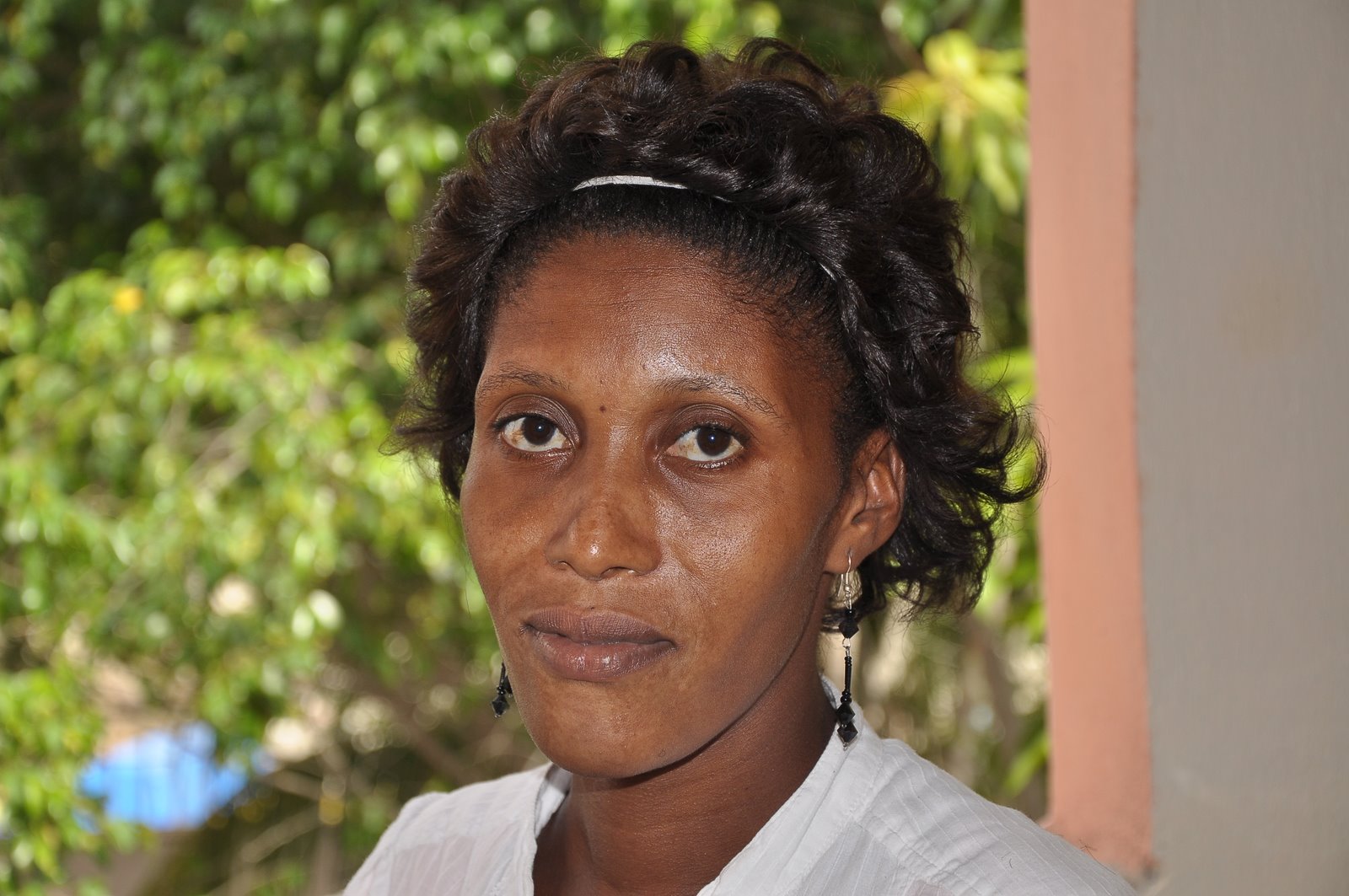

If you follow this blog at all, you may know about Heurese.
Heurese is a 31 year old Haitian female that has survived two heart surgeries, abandonment by OSF-SFMC in Peoria, four tropical storms, Haiti's gangs, the UN soldiers and the epic earthquake on January 12, 2010.
Heurese told me today that she was outside her shack in Carrefour talking to a friend the night of the quake. They heard a loud noise and watched shacks as they collapsed. They heard people screaming from everywhere.
Heurese said she knew for sure that it was an earthquake and thought for sure that she lost her two young children as they were headed home from school with her sister Jenny. However, Jenny and the kids showed up two hours later, afraid but not physically hurt.
Her cell phone did not work so Heurese, her kids, Jenny, and another sister Vita huddled in the street and stayed there for four days. Their brother showed up four days later and they all went to their mother's home in Bainet on Haiti's southern peninsula.
Today Heurese is in cosmetology school in P-a-P and sleeps in a pup tent with Jenny.
Heurese has survived again.

Friday, May 14, 2010
The Foxes and the Henhouse
I think the foxes are watching the henhouse again.
OSF HealthCare in Peoria is entering a formal discussion with Rockford Health Systems. The idea is to see if OSF Saint Anthony's in Rockford would combine with Rockford Memorial. This would expand OSF's business interests in northern Illinois.
But this move would probably cause OSF to create more scandal in the Catholic world of health care. Will women's "reproductive rights" such as abortion, sterilization, and oral contraceptives be allowed if the two hospitals in Rockford combine?
In the meantime, Catholics in the Peoria and Rockford Dioceses sit on their hands as the hospital's business leaders make the decisons. And where are the Bishops of the Peoria and Rockford Dioceses? Where are the OSF Sisters of the Third Order? When are we going to hear from them?
OSF HealthCare may acquire Rockford Health System
GateHouse News Service
Last update May 13, 2010 @ 05:53 PM
ROCKFORD — Peoria-based OSF HealthCare System wants to acquire Rockford Health System, and officials from the two facilities will spend the next several months researching the deal, according to reports in the Rockford Register Star and Rockford television station WREX-13.
The move would bring together the region’s two oldest hospitals — Rockford Memorial and OSF Saint Anthony Medical Center — and expand OSF’s services in northern Illinois and southern Wisconsin. Officials signed a nonbinding letter of intent this week and cited federal health care reform as one reason for the potential deal. A combined operation would reduce costs and provide more efficiency.
Representatives from the health systems declined today to comment on the deal.
Jim Farrell, senior vice president of communications and marketing for OSF HealthCare System, told the Journal Star that a news conference in scheduled Friday morning in Rockford to discuss the plans.
This would be the sixth attempt at a hospital merger locally in the last 23 years. Rockford Health System went through a similar process starting in 2008 when it announced a potential merger with Oak Brook-based Advocate Health Care, but that deal fell through about four months later.
OSF HealthCare, which is based in Peoria, has seven acute-care facilities in Illinois and Michigan. It also has a long-term care facility and two nursing colleges.
Rockford Health System is comprised of Rockford Memorial Hospital, Rockford Health Physicians, Van Matre HealthSouth Rehabilitation Hospital, Visiting Nurses Association and the Rockford Memorial Development Foundation.
John Chadwick, general manager of WREX-13, is a member of Rockford Health System’s board of directors. He did not inform the Register Star about the potential acquisition.
OSF HealthCare in Peoria is entering a formal discussion with Rockford Health Systems. The idea is to see if OSF Saint Anthony's in Rockford would combine with Rockford Memorial. This would expand OSF's business interests in northern Illinois.
But this move would probably cause OSF to create more scandal in the Catholic world of health care. Will women's "reproductive rights" such as abortion, sterilization, and oral contraceptives be allowed if the two hospitals in Rockford combine?
In the meantime, Catholics in the Peoria and Rockford Dioceses sit on their hands as the hospital's business leaders make the decisons. And where are the Bishops of the Peoria and Rockford Dioceses? Where are the OSF Sisters of the Third Order? When are we going to hear from them?
OSF HealthCare may acquire Rockford Health System
GateHouse News Service
Last update May 13, 2010 @ 05:53 PM
ROCKFORD — Peoria-based OSF HealthCare System wants to acquire Rockford Health System, and officials from the two facilities will spend the next several months researching the deal, according to reports in the Rockford Register Star and Rockford television station WREX-13.
The move would bring together the region’s two oldest hospitals — Rockford Memorial and OSF Saint Anthony Medical Center — and expand OSF’s services in northern Illinois and southern Wisconsin. Officials signed a nonbinding letter of intent this week and cited federal health care reform as one reason for the potential deal. A combined operation would reduce costs and provide more efficiency.
Representatives from the health systems declined today to comment on the deal.
Jim Farrell, senior vice president of communications and marketing for OSF HealthCare System, told the Journal Star that a news conference in scheduled Friday morning in Rockford to discuss the plans.
This would be the sixth attempt at a hospital merger locally in the last 23 years. Rockford Health System went through a similar process starting in 2008 when it announced a potential merger with Oak Brook-based Advocate Health Care, but that deal fell through about four months later.
OSF HealthCare, which is based in Peoria, has seven acute-care facilities in Illinois and Michigan. It also has a long-term care facility and two nursing colleges.
Rockford Health System is comprised of Rockford Memorial Hospital, Rockford Health Physicians, Van Matre HealthSouth Rehabilitation Hospital, Visiting Nurses Association and the Rockford Memorial Development Foundation.
John Chadwick, general manager of WREX-13, is a member of Rockford Health System’s board of directors. He did not inform the Register Star about the potential acquisition.
Monday, May 3, 2010
Who Can Mock this Church?
May 2, 2010
Op-Ed Columnist
Who Can Mock This Church?
By NICHOLAS D. KRISTOF
JUBA, Sudan
Maybe the Catholic Church should be turned upside down.
Jesus wasn’t known for pontificating from palaces, covering up scandals, or issuing Paleolithic edicts on social issues. Does anyone think he would have protected clergymen who raped children?
Yet if the top of the church has strayed from its roots, much of its base is still deeply inspiring. I came here to impoverished southern Sudan to write about Sudanese problems, not the Catholic Church’s. Yet once again, I am awed that so many of the selfless people serving the world’s neediest are lowly nuns and priests — notable not for the grandeur of their vestments but for the grandness of their compassion.
As I’ve noted before, there seem to be two Catholic Churches, the old boys’ club of the Vatican and the grass-roots network of humble priests, nuns and laity in places like Sudan. The Vatican certainly supports many charitable efforts, and some bishops and cardinals are exemplary, but overwhelmingly it’s at the grass roots that I find the great soul of the Catholic Church.
The Vatican believes that this newspaper and other news organizations have been unfair and overzealous in excavating the church’s cover-ups of child rape. I see the opposite. No organization has done more to elevate the moral stature of the Catholic Church in the United States than The Boston Globe. Its groundbreaking 2002 coverage of abuse by priests led to reforms and by most accounts a significant reduction in abuse. Catholic kids are safer today not because of the cardinals’ leadership, but because of The Boston Globe’s.
Yet the church leaders are right about one thing: there is often a liberal and secular snobbishness toward the church as a whole — and that is unfair.
It may be easy at a New York cocktail party to sniff derisively at a church whose apex is male chauvinist, homophobic and so out of touch that it bars the use of condoms even to curb AIDS. But what about Father Michael Barton, a Catholic priest from Indianapolis? I met Father Michael in the remote village of Nyamlell, 150 miles from any paved road here in southern Sudan. He runs four schools for children who would otherwise go without an education, and his graduates score at the top of statewide examinations.
Father Michael came to southern Sudan in 1978 and chatters fluently in Dinka and other local languages. To keep his schools alive, he persevered through civil war, imprisonment and beatings, and a smorgasbord of disease. “It’s very normal to have malaria,” he said. “Intestinal parasites — that’s just normal.”
Father Michael may be the worst-dressed priest I’ve ever seen — and the noblest.
Anybody scorn him? Anybody think he’s a self-righteous hypocrite?
On the contrary, he would make a great pope.
In the city of Juba, I met Cathy Arata, a nun from New Jersey who spent years working with battered women in Appalachia. Then she moved to El Salvador during the brutal civil war there, putting her life on the line to protect peasants. Two years ago, she came here on behalf of a terrific Catholic project called Solidarity With Southern Sudan.
Sister Cathy and the others in the project have trained 600 schoolteachers. They are fighting hunger not with handouts but with help for villagers to improve agricultural techniques. They are also establishing a school for health workers, with a special focus on midwifery to reduce deaths in childbirth.
At the hospital attached to that school, the surgeon is a nun from Italy. The other doctor is a 72-year-old nun from Rhode Island. Nuns rock.
Sister Cathy would like to see more decentralization in the church, a greater role for women, and more emphasis on public service. She says she worries sometimes that if Jesus returned he would say, “Oh, they got it all wrong!”
She would make a great pope, too.
There are so many more like them. There’s Father Mario Falconi, an Italian priest who refused to leave Rwanda during the genocide and bravely saved 3,000 people from being massacred. There’s Father Mario Benedetti, a 72-year-old Italian priest based in Congo who fled with his congregation when their town was attacked by a brutal militia. Now Father Mario lives side by side with his Congolese congregants in the squalor of a refugee camp in southern Sudan, struggling to get schooling for their children.
It’s because of brave souls like these that I honor the Catholic Church. I understand why many Americans disdain a church whose leaders are linked to cover-ups and antediluvian stances on women, gays and condoms — but the Catholic Church is far larger than the Vatican.
And unless we’re willing to endure beatings alongside Father Michael, unless we’re willing to stand up to warlords with Sister Cathy, we have no right to disparage them or their true church.
---------------
I don't agree with everything written in this article. But I do agree that the "simple" priests and nuns and the "simple" laity of the Church, many living in the developing world, make the Church go.
jc
Op-Ed Columnist
Who Can Mock This Church?
By NICHOLAS D. KRISTOF
JUBA, Sudan
Maybe the Catholic Church should be turned upside down.
Jesus wasn’t known for pontificating from palaces, covering up scandals, or issuing Paleolithic edicts on social issues. Does anyone think he would have protected clergymen who raped children?
Yet if the top of the church has strayed from its roots, much of its base is still deeply inspiring. I came here to impoverished southern Sudan to write about Sudanese problems, not the Catholic Church’s. Yet once again, I am awed that so many of the selfless people serving the world’s neediest are lowly nuns and priests — notable not for the grandeur of their vestments but for the grandness of their compassion.
As I’ve noted before, there seem to be two Catholic Churches, the old boys’ club of the Vatican and the grass-roots network of humble priests, nuns and laity in places like Sudan. The Vatican certainly supports many charitable efforts, and some bishops and cardinals are exemplary, but overwhelmingly it’s at the grass roots that I find the great soul of the Catholic Church.
The Vatican believes that this newspaper and other news organizations have been unfair and overzealous in excavating the church’s cover-ups of child rape. I see the opposite. No organization has done more to elevate the moral stature of the Catholic Church in the United States than The Boston Globe. Its groundbreaking 2002 coverage of abuse by priests led to reforms and by most accounts a significant reduction in abuse. Catholic kids are safer today not because of the cardinals’ leadership, but because of The Boston Globe’s.
Yet the church leaders are right about one thing: there is often a liberal and secular snobbishness toward the church as a whole — and that is unfair.
It may be easy at a New York cocktail party to sniff derisively at a church whose apex is male chauvinist, homophobic and so out of touch that it bars the use of condoms even to curb AIDS. But what about Father Michael Barton, a Catholic priest from Indianapolis? I met Father Michael in the remote village of Nyamlell, 150 miles from any paved road here in southern Sudan. He runs four schools for children who would otherwise go without an education, and his graduates score at the top of statewide examinations.
Father Michael came to southern Sudan in 1978 and chatters fluently in Dinka and other local languages. To keep his schools alive, he persevered through civil war, imprisonment and beatings, and a smorgasbord of disease. “It’s very normal to have malaria,” he said. “Intestinal parasites — that’s just normal.”
Father Michael may be the worst-dressed priest I’ve ever seen — and the noblest.
Anybody scorn him? Anybody think he’s a self-righteous hypocrite?
On the contrary, he would make a great pope.
In the city of Juba, I met Cathy Arata, a nun from New Jersey who spent years working with battered women in Appalachia. Then she moved to El Salvador during the brutal civil war there, putting her life on the line to protect peasants. Two years ago, she came here on behalf of a terrific Catholic project called Solidarity With Southern Sudan.
Sister Cathy and the others in the project have trained 600 schoolteachers. They are fighting hunger not with handouts but with help for villagers to improve agricultural techniques. They are also establishing a school for health workers, with a special focus on midwifery to reduce deaths in childbirth.
At the hospital attached to that school, the surgeon is a nun from Italy. The other doctor is a 72-year-old nun from Rhode Island. Nuns rock.
Sister Cathy would like to see more decentralization in the church, a greater role for women, and more emphasis on public service. She says she worries sometimes that if Jesus returned he would say, “Oh, they got it all wrong!”
She would make a great pope, too.
There are so many more like them. There’s Father Mario Falconi, an Italian priest who refused to leave Rwanda during the genocide and bravely saved 3,000 people from being massacred. There’s Father Mario Benedetti, a 72-year-old Italian priest based in Congo who fled with his congregation when their town was attacked by a brutal militia. Now Father Mario lives side by side with his Congolese congregants in the squalor of a refugee camp in southern Sudan, struggling to get schooling for their children.
It’s because of brave souls like these that I honor the Catholic Church. I understand why many Americans disdain a church whose leaders are linked to cover-ups and antediluvian stances on women, gays and condoms — but the Catholic Church is far larger than the Vatican.
And unless we’re willing to endure beatings alongside Father Michael, unless we’re willing to stand up to warlords with Sister Cathy, we have no right to disparage them or their true church.
---------------
I don't agree with everything written in this article. But I do agree that the "simple" priests and nuns and the "simple" laity of the Church, many living in the developing world, make the Church go.
jc
Subscribe to:
Posts (Atom)
